A digital impression is a fleeting, ephemeral event, a line of code rendered as pixels on a screen, seen for a fraction of a second before being scrolled past or blocked. It’s an interaction with an algorithm. But what if an ad could be more?
What if it could be a real, tangible part of someone’s day, a shared urban experience, and a symbol of trust? This is the unique and often overlooked power of taxi advertising. It succeeds not by being smarter than digital, but by being infinitely more human.
The Tangible vs. The Ephemeral
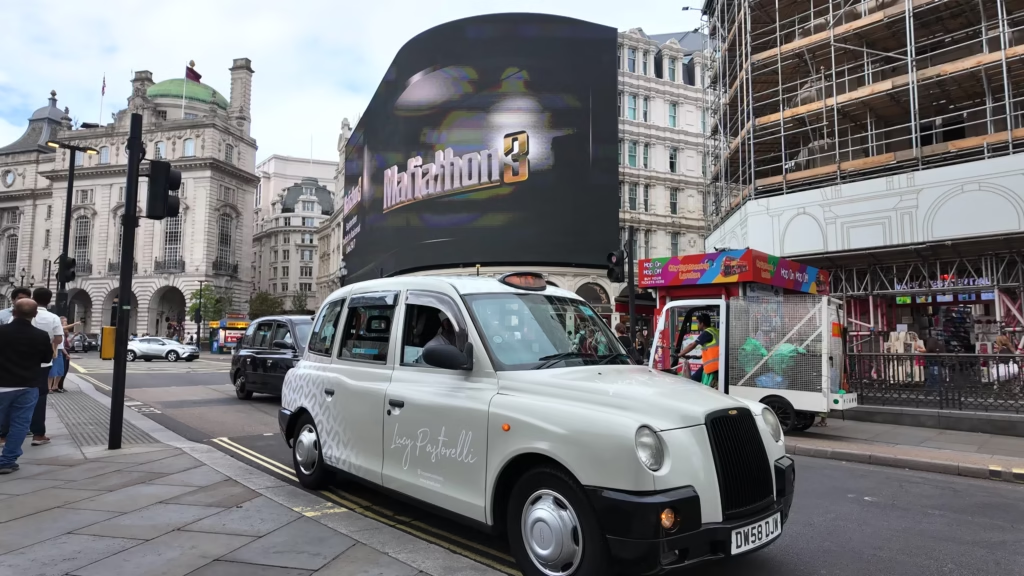
A digital ad exists only in the non-space of the internet. It has no weight, no texture, no physical presence. A branded taxi, on the other hand, is a real-world object. It has mass and momentum. You can see it reflecting the city lights, hear its engine in traffic, and watch it navigate the physical streets.
This tangibility matters. In a world saturated with digital noise, something real cuts through. It occupies space in our world, not just on our screens. This physical presence lends the brand a sense of legitimacy and permanence. It’s not just a pop-up that can be dismissed with a click; it’s a part of the city’s fabric, as real as the buildings and the people around it.
A Shared Experience, Not an Isolated Target
Digital advertising is a private conversation between an algorithm and an individual. It often creates a sense of unease. Your search for a new pair of shoes results in that exact pair of shoes appearing in your social feed, a stark reminder that your behaviour is being tracked.
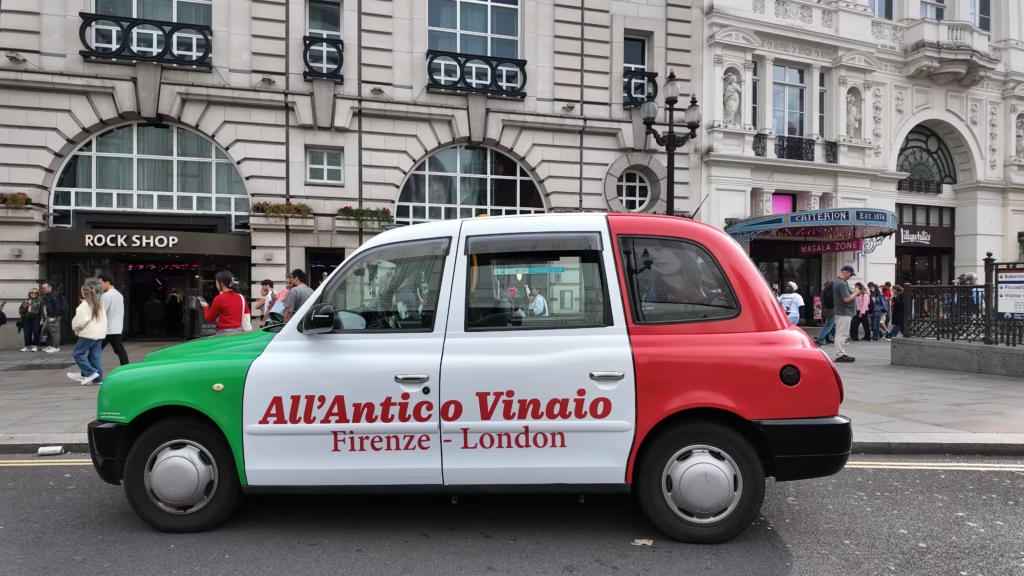
Taxi advertising is the complete opposite. It’s a public broadcast, a shared experience. When a colourful taxi drives down the street, it is seen by everyone at once: the pedestrian waiting to cross, the couple in the cafe window, the driver in the next lane.
This creates a collective moment, a small, shared part of the urban experience. The brand is not targeting you personally; it is speaking to the community as a whole. This public nature feels more open, honest, and less intrusive, fostering a more positive brand association.
The Human Element of the Journey

An ad impression is a sterile data point. A taxi journey is a human story. People take taxis for reasons that are often significant: a trip to the airport for a long-awaited holiday, a ride to a make-or-break business meeting, a journey to the hospital for the birth of a child, or the safe trip home after a memorable night out.
A branded taxi doesn’t just display an ad; it becomes a part of that human journey. The brand is the silent companion during these important moments. Furthermore, the ad is attached to a vehicle operated by a driver.
This human element is a world away from an ad served by a faceless server farm. The brand is connected, however subtly, to the human fabric and service of the city itself.
The Endorsement of the Real World
In the digital realm, the barrier to entry for advertising is incredibly low, making it a breeding ground for scams, clickbait, and untrustworthy content. As a result, users are rightly sceptical.
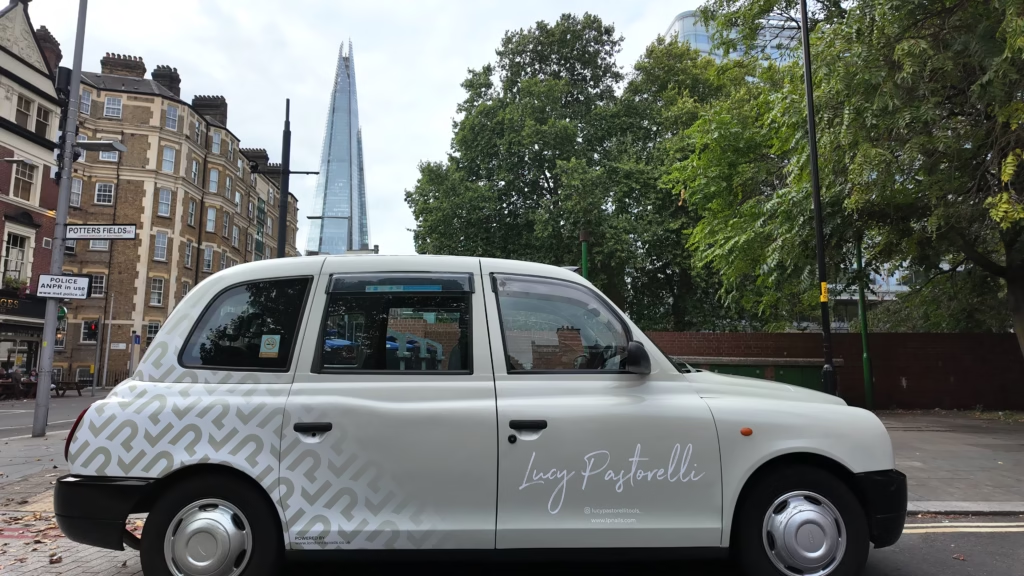
A taxi advertising campaign, however, requires a significant real-world investment. A company has to design the creative, print the high-quality vinyl, and pay to have a fleet of physical vehicles professionally wrapped. This tangible effort signals legitimacy and commitment. It’s a subconscious endorsement that says, “We are a serious, established brand, invested enough to have a presence in the real world.” This physical proof of existence builds a level of trust that a fleeting digital ad struggles to achieve.
In our data-obsessed age, it’s easy to forget that we are marketing to people, not to profiles. While digital advertising offers unparalleled precision, it often lacks a soul. Taxi advertising thrives by being everything digital is not: tangible, public, and intrinsically linked to the human experience of the city. It reminds us that the most powerful way to make an impression is not to chase a click, but to become a memorable part of someone’s world.
Frequently Asked Questions
1. Can a physical ad really compete with the targeting of digital?
It’s not about competing; it’s about complementing. Digital ads are for precision targeting; taxi ads are for building broad trust, awareness, and a feeling of legitimacy. A taxi ad may not target one person, but it can perfectly target a high-value place, like a financial district or a luxury shopping street, reaching a highly relevant audience.
2. How do you measure the “human” impact of a taxi ad?
While you can’t measure feelings directly, you can measure their effects. This is done through post-campaign brand uplift studies, which survey people about their perception, trust, and recall of a brand. An increase in brand trust is a key indicator of successful “human” connection.
3. Isn’t this just old-fashioned advertising?
The medium is traditional, but the context is modern. In a world overwhelmed by digital noise, “old-fashioned” real-world advertising has become new again. Its tangible nature is what makes it stand out and feel more authentic compared to the ephemeral digital ads we see every day.
4. What makes a taxi ad specifically more “human” than a bus ad?
A taxi provides a more personal experience. A bus is mass transit, whereas a taxi is a private vehicle, often associated with a personal or important journey. The ad on a taxi feels closer to the individual’s own story, and the interaction with a single driver is more personal than the anonymous experience of being on a bus.