While marketers have become experts at integrating digital channels like email, social media, and search, a critical gap often remains: how do you effectively connect your real-world presence with your digital ecosystem?
This is where a classic Out-of-Home (OOH) format has re-emerged as a surprisingly modern and powerful solution. Taxi advertising is no longer just a moving billboard; it’s a dynamic bridge that unites your physical and digital efforts, turning a simple ad into a gateway for deeper brand engagement.
Step 1: The Real-World Anchor for Digital Efforts
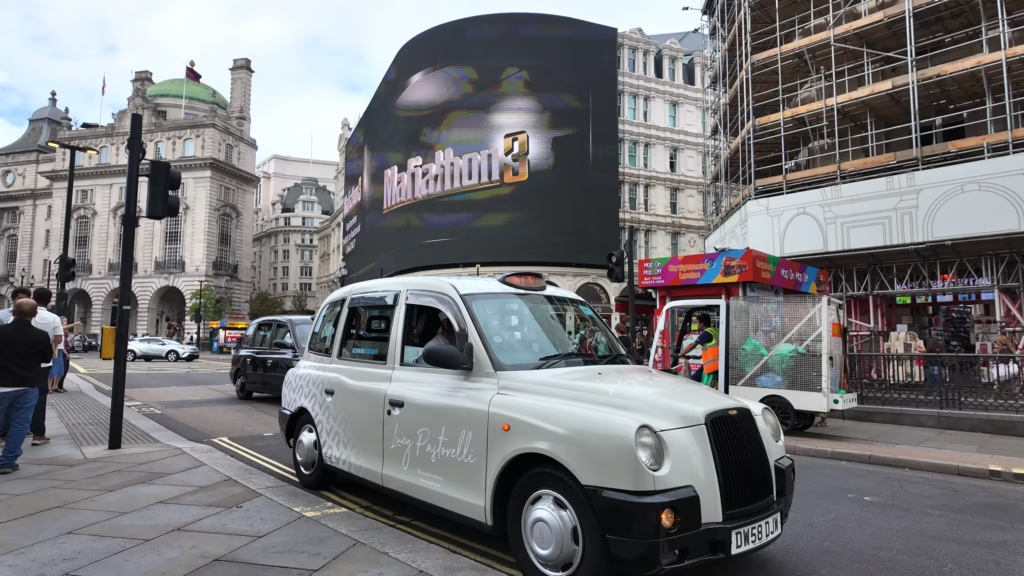
Every successful multi-channel campaign needs a strong anchor in the real world to build top-of-funnel awareness and trust. A digital ad can be effective, but it lacks the weight and credibility of a physical presence. Taxi advertising provides this tangible foundation.
A fleet of branded taxis creates an unmissable physical footprint in a city. It builds massive brand recall through sheer visibility and repetition. This real-world presence makes your brand feel more established and trustworthy, creating a powerful “halo effect” that a fleeting digital impression struggles to match.
When a consumer later encounters your brand online, it’s not a cold introduction; they are meeting a brand they already recognise from the streets, making them far more likely to engage.
Step 2: The Bridge to Online Engagement

This is where taxi advertising reveals its true multi-channel genius. It’s not just a passive ad; it’s an active launchpad for digital interaction.
- Driving Social Media Amplification: A beautifully designed taxi is inherently “Instagrammable.” Brands like Pretty Little Thing have turned their fleets of pink taxis into mobile photo booths, encouraging people to snap and share photos with a unique hashtag in exchange for vouchers. This brilliantly leverages user-generated content (UGC), transforming a paid OOH campaign into a viral organic social media movement, massively amplifying its reach at no extra cost.
- A Direct Link via QR Codes: The interior of a taxi is a distraction-free zone, offering a captive audience for an average of 15-25 minutes. This is the perfect environment to bridge the physical-to-digital gap. A simple QR code on a tip-seat ad can instantly transport a passenger to your digital world, whether it’s to:
- Download an app.
- Visit a specific landing page with an exclusive offer.
- Follow your brand on social media.
- Sign up for a newsletter.
- Download an app.
- Powering Location-Based Digital Ads: The most advanced strategies use anonymized mobile location data to connect OOH exposure with digital retargeting. A user whose phone is detected in the vicinity of your branded taxi can be added to an audience that later receives a follow-up ad on their social media feed, creating a powerful and seamless marketing sequence.
Step 3: Facilitating Real-World Experiences

The ultimate goal of many multi-channel campaigns is to drive a real-world action or experience, and branded taxis can play a central role here.
Fashion and lifestyle brands have used their taxi fleets to offer chauffeured rides to VIPs for exclusive events, creating a premium, memorable experience. For the launch of the film “The Archies,” Netflix wrapped taxis in the movie’s vibrant visuals, turning the streets into a rolling premiere that brought the film’s world to life.
This transforms the taxi from an ad into an integral part of an experiential marketing campaign, creating a powerful, lasting impression that drives word-of-mouth both online and off.
In a world where the lines between physical and digital are constantly blurring, your marketing strategy needs a tool that can navigate both realms with ease. Taxi advertising is that tool. It’s a versatile, multi-channel powerhouse that builds real-world awareness, sparks digital engagement, and facilitates memorable brand experiences.
Frequently Asked Questions
- What is a multi-channel marketing campaign?
A multi-channel campaign is a strategy that uses a combination of different marketing channels (both online and offline) to interact with customers. The goal is to create a seamless and consistent brand experience, whether the customer is on social media, in a physical store, or seeing an ad on the street. - How exactly does a taxi ad lead to social media engagement?
By creating a visually striking and unique taxi design (a “wow” factor), brands encourage people to take photos and share them online. By adding a unique hashtag to the design, brands can track this user-generated content and even run competitions to incentivise sharing, turning their audience into brand ambassadors. - Is this kind of strategy only affordable for big brands?
Not at all. The principles are scalable. A smaller business can use a single, creatively wrapped taxi in a local area combined with a QR code linking to their Instagram page. The key is to think of the taxi not just as an ad, but as a bridge to your other marketing channels, whatever their scale. - How do you measure the digital impact of a taxi ad?
The digital impact is highly measurable. You can track scans of a unique QR code, monitor the use of a specific promo code displayed in the ad, and measure traffic to a dedicated landing page URL. You can also track the usage and reach of your campaign’s unique hashtag on social media platforms. - Which part of the taxi ad is most important for a multi-channel strategy?
Both the exterior and interior are crucial and work together. The exterior wrap creates the initial awareness and the “Instagrammable” moment that fuels social media. The interior ads are what close the loop, using QR codes and other calls-to-action to drive direct traffic to your digital platforms.