Most B2B marketing budgets go into digital: paid search, LinkedIn ads, content, email sequences. And while those channels have their place, there is a growing problem. Everyone is doing the same thing, in the same feeds, fighting for the same 2-second attention window.
Taxi advertising in London cuts through that noise in a way most digital channels simply cannot. It puts your brand in front of the right people, in the right city, repeatedly. And when you break down the numbers, the ROI argument becomes hard to ignore.
What the Numbers Actually Look Like?
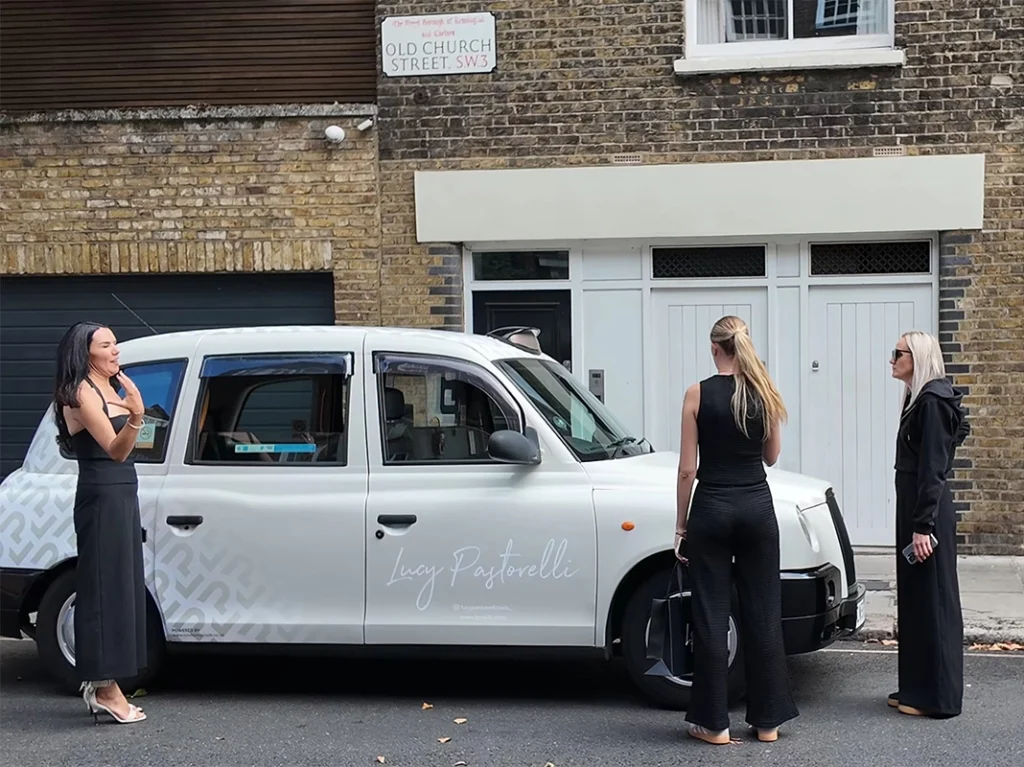
London has over 15,000 licensed black cabs operating across the city at any given time. A single wrapped taxi can generate between 30,000 and 40,000 visual impressions per day, depending on the route and time of day. Multiply that across a fleet campaign running for 4 to 6 weeks and you are looking at millions of impressions delivered without a single click, cookie, or algorithm deciding who sees it.
The cost-per-thousand impressions (CPM) for taxi advertising in London typically ranges from £3 to £8. For context, the average LinkedIn CPM sits between £5 and £12 depending on audience targeting. Here is how taxi stacks up:
- CPM of £3 to £8 vs LinkedIn CPM of £5 to £12 for similar professional audiences
- No ad fatigue, no scroll, and no ad blockers affecting delivery
- Millions of impressions over a 4 to 6 week fleet campaign with zero algorithmic interference
- Brand recall for out-of-home advertising is up to 43% higher than digital display in high-traffic urban environments
Why It Works for B2B Specifically?
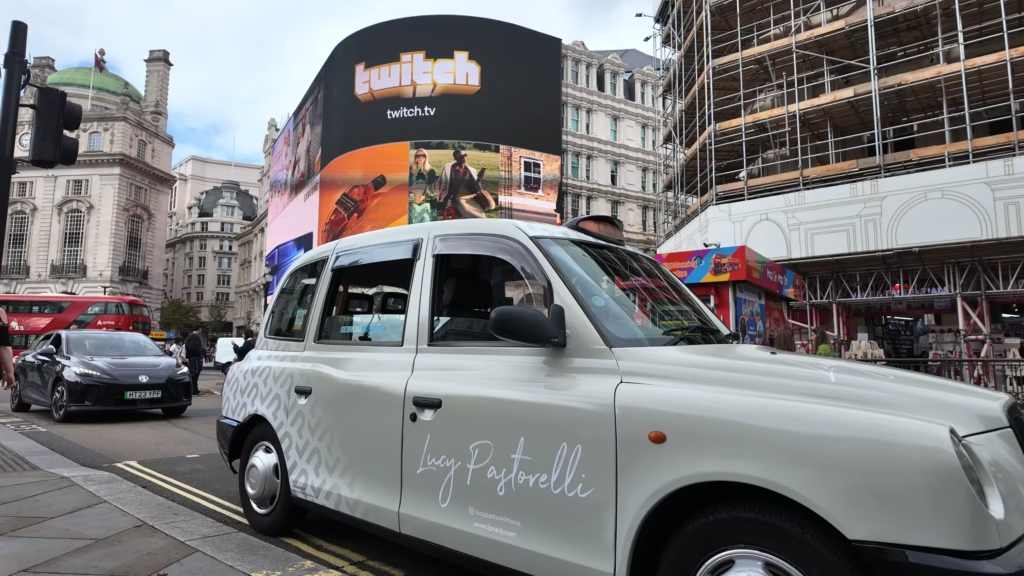
B2B buying decisions involve multiple people and long sales cycles. Brand familiarity plays a significant role in which vendors even make it to the shortlist. This is where London taxi advertising has a unique edge.
Decision-makers, finance heads, founders, and senior managers in London use taxis. They commute through the City, travel between Canary Wharf and the West End, attend events, take client meetings. Here is what makes taxi advertising work so well for B2B:
- Repeated exposure builds brand recall without any action required from the audience
- Physical visibility signals legitimacy, especially important for newer SaaS or fintech brands trying to establish credibility
- Prospects who have seen your brand on the street are more likely to engage when they encounter your LinkedIn ad or Google result
- There is no targeting guesswork in a city like London where your audience is already concentrated
- A 4-week campaign with 50 taxis consistently outperforms a 2-week campaign with 100, because frequency of exposure drives recall
When a potential client lands on your website or sees your sales email, the brand has already been encountered multiple times. That familiarity reduces friction and builds the low-level trust that makes people more receptive to your message.
The Attribution Challenge (and Why It Does Not Matter as Much as You Think)
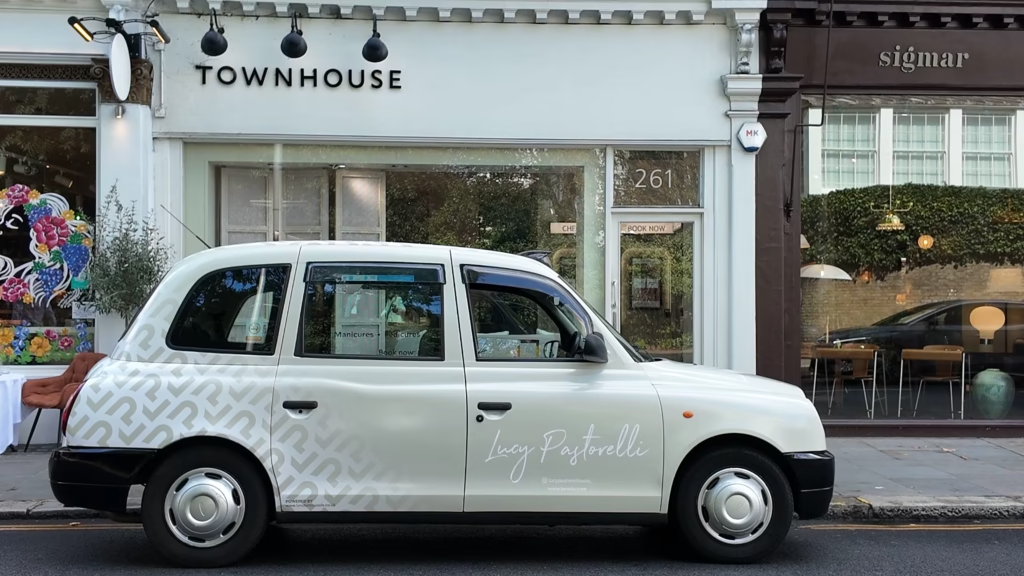
The most common objection to out-of-home advertising in a B2B context is attribution. You cannot track a taxi impression the way you track a click. That is true. But research consistently shows that multi-touchpoint campaigns outperform single-channel ones by 24% on average. Taxi advertising is not meant to replace your digital funnel. It feeds it.
There are practical ways to measure impact even without direct tracking:
- Monitor branded search volume during and after the campaign. Companies running active taxi campaigns in London often see a 15 to 25% lift in branded searches
- Use vanity URLs or QR codes on taxi creative to create trackable offline-to-online touchpoints
- Track email open rates and LinkedIn engagement during the campaign window for uplift signals
- Compare pipeline velocity before and during the campaign to identify any changes in sales cycle length
Brands that run taxi advertising in London alongside digital campaigns report higher branded search volumes, stronger email open rates, and shorter sales cycles. The physical presence creates a mental anchor that makes every other touchpoint work harder.
What a B2B Taxi Campaign Actually Looks Like?

A typical B2B taxi advertising campaign in London involves a wrapped fleet of between 20 and 100 cabs running for 4 to 8 weeks. Route weighting depends on your target audience:
- Financial services and legal tech: focus on the City and Canary Wharf for dense professional exposure
- Tech startups and scale-ups: Shoreditch, King’s Cross, and Old Street roundabout deliver the highest relevant impressions
- Professional services targeting a broad business audience: a citywide fleet ensures maximum reach
The creative should be clean and bold with a clear value proposition, a recognisable logo, and a single call to action. The goal is not to be seen once. It is to become familiar.
Who Is Already Using It?
You will see fintech brands, legal tech companies, professional services firms, and B2B SaaS platforms consistently showing up on London taxis. That is not coincidence. These brands have figured out that in a city with 9 million people and a dense concentration of business decision-makers, consistent physical visibility is a competitive advantage.
If your B2B brand is targeting London-based businesses and you are not part of the conversation on the streets, you are leaving real recall and pipeline influence on the table.
Building the Internal Business Case

If you need to make the case internally for adding taxi advertising London to your media mix, the argument is straightforward. Your current channels are competitive, noisy, and increasingly expensive. Out-of-home advertising in London offers a high-reach, low-friction format that builds brand trust over time and makes your existing digital spend work harder.
The brands that win in B2B marketing are not always the ones with the best product. They are the ones that show up most consistently in front of the right audience. In London, taxis are one of the most cost-effective ways to do exactly that.
If you are evaluating taxi advertising London as a channel for the first time, it is worth having a conversation about what a targeted fleet campaign could look like for your brand.