In the relentless, 24/7 rush of urban London, attention is the most valuable commodity. Every street corner, Tube station, and building facade is a battleground where brands fight for a fleeting moment of a consumer’s focus. For decades, the weapon of choice in this battle was the static billboard: big, bold, and fixed in place. But in a city that is constantly in motion, moving ads are the new trend.
Increasingly, savvy marketers are realising that to capture a mobile audience, your message needs to be mobile too. The evidence is clear: moving advertisements on taxis, buses, and other vehicles consistently outperform their static counterparts. They don’t just wait for an audience to find them; they actively seek it out, weaving through the very fabric of the city and delivering a more dynamic, memorable, and effective brand experience.
The Limits of a Fixed Position
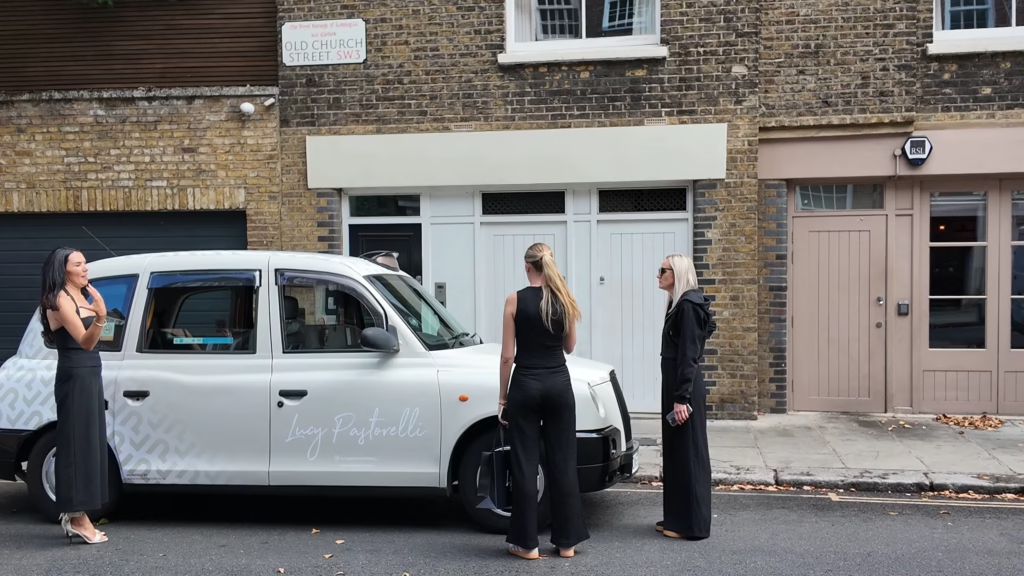
Static billboards have long been a staple of Out-of-Home (OOH) advertising, and they can be effective for long-term brand presence in high-traffic areas. However, in a dense urban environment like London, their limitations become stark.
- Ad Blindness: A billboard on a commuter’s daily route quickly becomes part of the scenery. The human brain is incredibly efficient at filtering out familiar, unchanging stimuli. After a few viewings, a static ad fades into the urban wallpaper.
- A Siloed Audience: A fixed billboard can only ever reach the people who pass that specific location. Its audience is geographically trapped, unable to get to the diverse communities and demographics just a few streets away.
- One-Dimensional Messaging: A static ad broadcasts a single message to a broad, undifferentiated crowd. It cannot adapt to its environment or the time of day, delivering the same message to a morning commuter as it does to an evening theatre-goer.
Why Movement Is the Ultimate Advantage?
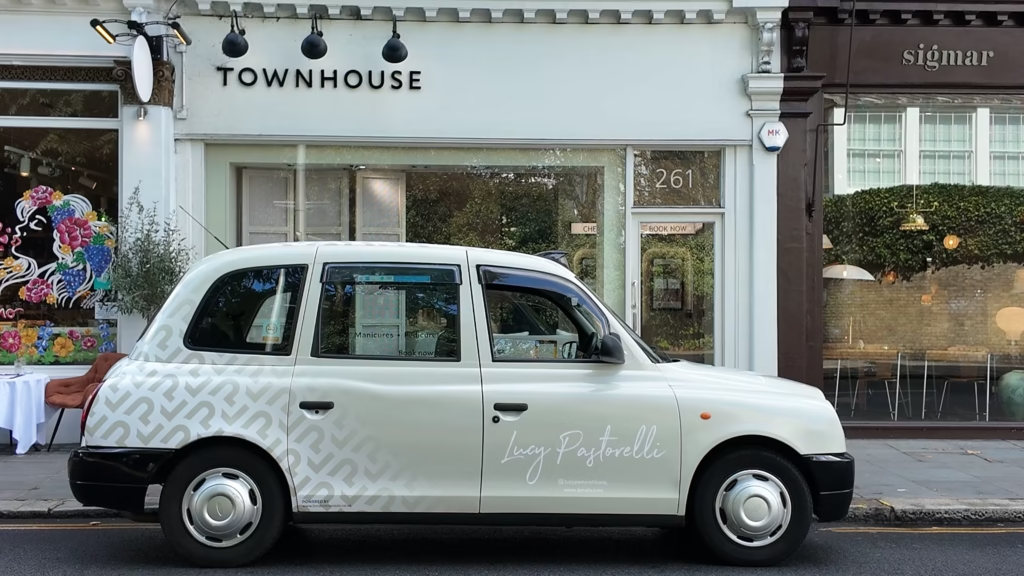
Moving ads overcome these limitations by their very nature. They are dynamic, adaptable, and designed for a city that never stands still.
- Unrivalled Reach and Penetration: This is the most significant advantage. A moving ad is not confined to a single postcode. A branded taxi can start its day reaching families in Clapham, spend the afternoon among affluent shoppers in Kensington, and finish the night in the bustling entertainment hubs of Soho. This ability to traverse multiple districts allows a single ad to connect with a vastly wider and more diverse audience than any static site could hope to reach.
- Breaking Through the Clutter: Movement naturally draws the human eye. In a visually saturated environment, a moving object stands out against a static background. This simple biological fact means a branded vehicle is far more likely to be noticed than a fixed poster. Studies have shown that mobile billboard ads have an incredible recall rate, with up to 97% of people remembering an ad they saw on a vehicle.
- Hyper-Targeted Street-Level Exposure: Moving ads operate where life happens at street level. They are right next to pedestrians on the pavement, drivers in adjacent cars, and diners in roadside cafes. This proximity makes the message feel more personal and immediate. Furthermore, vehicles like taxis naturally congregate in the most economically active areas, guaranteeing your brand is seen in key commercial, retail, and tourist hotspots.
- Flexibility and Real-Time Relevance: The rise of digital screens on moving vehicles has unlocked another level of effectiveness. These ads can be changed in real-time using programmatic technology. A coffee brand can advertise to morning commuters, a restaurant can promote its lunch specials at noon, and a retailer can announce a flash sale. This contextual relevance makes the advertising more of a helpful suggestion than an intrusive broadcast.

In the final analysis, the difference is simple. A static billboard is a landmark; a moving ad is a presence. While a landmark can be impressive, a presence is felt everywhere. In the dynamic, fragmented, and fast-paced environment of urban London, the ability to move with the city and its people is what separates an ad that is simply placed from an ad that truly performs.
Frequently Asked Questions
1. Aren’t static billboards cheaper than moving ads?
While the initial production cost for a single static billboard might be lower, moving ads often provide a better return on investment (ROI). Their ability to reach a much larger and more diverse audience means the cost per impression is often significantly lower, offering better value for your marketing spend.
2. How can you target a specific audience with a moving ad?
Targeting is highly effective. You can select fleets of vehicles (like taxis) that are based in your key neighbourhoods, ensuring a high frequency of views in that area. For digital moving ads, you can use geo-fencing to display specific creative when the vehicle enters a certain postcode, allowing for incredibly precise location-based marketing.
3. Which format is better for long-term brand awareness?
Both have their strengths. A static billboard can build deep familiarity in a single, high-traffic location. However, a moving ad campaign builds broader, city-wide awareness. By being seen across multiple parts of the city, it can create a perception of being a larger, more ubiquitous brand.
4. Is it a case of choosing one or the other?
Not at all. The most sophisticated OOH strategies often use a hybrid approach. A landmark static billboard can be used to anchor a brand in a key location, while a fleet of moving ads provides the dynamic reach needed to activate the entire city.