In the hyper-competitive world of Fast-Moving Consumer Goods (FMCG), the battle for supremacy is won and lost in fractions of a second. It’s won in the split-second a shopper’s eye is caught, the moment a brand name comes to mind, and the instant a hand reaches for a product on a crowded supermarket shelf. For decades, this battle was fought primarily in-store and on television. But as digital noise reaches a deafening crescendo, the smartest FMCG giants are taking the fight to a new front: the city streets.
They are deploying one of the most powerful and visually dominant tools in the marketing arsenal: taxi advertising. By transforming fleets of iconic black cabs into vibrant, moving billboards, these brands are ensuring they are not just on the shelf, but everywhere.
1. Winning the War for Top-of-Mind Awareness

Most FMCG purchases are driven by habit and impulse. Brand recall is everything. You want consumers to recognise your brand and to be the first one they think of. This is where the sheer scale of taxi advertising becomes a game-changer.
A single branded taxi is a workhorse of visibility, seen an estimated 8 million times every month as it navigates the busiest parts of the city. It operates 24/7, reaching a vast and varied audience of pedestrians, drivers, and passengers. Unlike a fleeting digital ad, a fleet of brightly-coloured taxis creates a powerful physical presence.
2. Hyperlocal Targeting: The Last Mile to the Shopping Basket

The holy grail for any FMCG brand is to influence the customer just before they make a purchase. While traditional billboards are stuck on main roads, taxis penetrate the very heart of communities. They travel where billboards can’t go into residential neighbourhoods, past local convenience stores, and right up to the entrances of major supermarkets.
This hyperlocal reach is incredibly powerful. An ad for a new ice cream flavour seen on a taxi driving past a local park on a sunny day, or a promotion for a cleaning product seen in a residential area on a Saturday morning, is a timely and relevant prompt. It closes the gap between seeing the brand and buying the brand. Modern digital taxi top screens take this even further, allowing brands to display geo-targeted ads that change based on the taxi’s proximity to specific retail chains.
3. Launching New Products with a City-Wide Splash
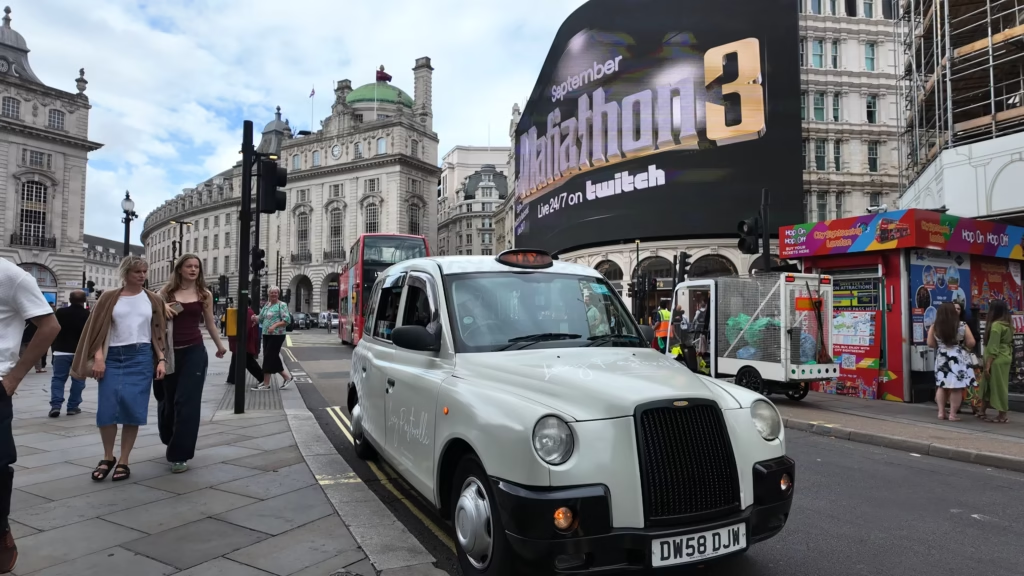
When launching a new product, flavour, or packaging, the goal is to create maximum impact in a short space of time. You need to generate buzz, intrigue, and demand. A full taxi wrap advertising campaign is one of the most effective ways to achieve this.
Imagine a fleet of 100 taxis, all wrapped in the vibrant branding of a new soft drink, released onto the streets of London simultaneously. It creates an instant “takeover” effect. The campaign becomes a topic of conversation, amplified across social media as people share photos of the eye-catching cabs. This high-impact launch strategy alerts the entire city to your new product, driving consumers to seek it out in-store and creating demand that encourages retailers to give it prime shelf space.
4. From Moving Ad to Memorable Experience
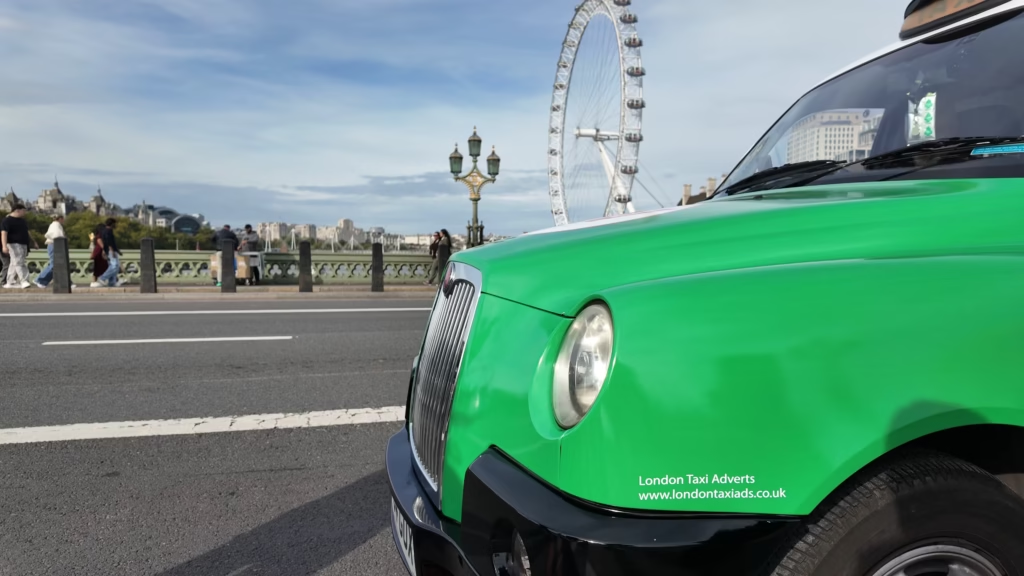
The most innovative FMCG brands use taxis for more than just passive advertising; they turn them into platforms for experiential marketing, creating positive, memorable interactions that build deep brand affinity.
- In-Cab Sampling: Brands like Raw Pressery have used their branded taxis to offer free juice samples to passengers, turning a simple journey into a product trial and a data-capture opportunity.
- Creating Joyful Moments: Cadbury’s legendary “#JoyCabs” campaign offered free rides in their iconic purple taxis, often filled with chocolate. This masterstroke directly associated the brand with happiness and generosity, creating a wave of positive PR and social media buzz.
- Driving Social Engagement: Fashion brand Pretty Little Thing unleashed a fleet of bright pink taxis on London, encouraging people to post photos with the cabs to win vouchers. This tactic brilliantly leveraged user-generated content to amplify the campaign’s reach far beyond the physical streets.
In the fast-moving consumer goods market, standing still is the fastest way to fall behind. You need a marketing strategy that is as mobile, dynamic, and ubiquitous as the consumers you want to reach. Taxi advertising provides exactly that. It’s a high-impact, street-level media that builds mass awareness, drives recall at the crucial point of sale, and creates memorable brand experiences that digital ads can only dream of. It proves that in the 21st century, the customer journey starts on the avenue.
Frequently Asked Questions
- Why is taxi advertising so effective for low-cost FMCG products?
FMCG purchases are often impulse buys driven by brand recall. The high frequency and visibility of taxi ads build this top-of-mind awareness across a massive urban audience, making your brand the default choice at the point of purchase. - Can you target specific supermarket chains or retail areas?
Yes. While you can’t dictate a taxi’s exact route, you can select fleets based in areas with a high concentration of your target retailers. Furthermore, digital taxi top screens can be programmed to display your ad when the vehicle enters a specific geographic zone, such as the area around a major Tesco or Sainsbury’s. - How do you measure the ROI for an FMCG taxi campaign?
ROI can be measured through post-campaign brand uplift studies, which survey consumer awareness and purchase intent. Brands also closely monitor sales data in the target city to track uplift during the campaign period and correlate it with the advertising activity. - What’s a better tactic for an FMCG brand: a full wrap or interior ads?
A full wrap is best for large-scale brand awareness and new product launches, as it offers maximum visual impact on the street. Interior ads are brilliant for driving trial and engagement, for instance, by using a QR code that offers a digital coupon. - How quickly can a taxi advertising campaign be launched for a new product?
One of the key advantages of taxi advertising is its speed. From finalising the design to having a fleet of wrapped taxis on the street can take as little as 10 days, making it an agile and responsive medium for fast-moving brands.