Out-of-Home (OOH) advertising is a battle for visibility. For brands that want to make a real-world impact, moving media is king. But this raises a crucial strategic question: which vehicle is the right one for your message? The two titans of transit advertising, bus ads and taxi ads, both promise to take your brand to the streets, but they offer fundamentally different advantages.
Choosing between the two isn’t about which is “better” but understanding which is better for you. One is a powerhouse of mass communication, a roaming billboard for the people. The other is a surgical tool of precision and prestige. The right choice depends entirely on your brand, your audience, and your goals.
The Case for Bus Advertising: The Power of Mass Reach
Think of a bus ad as a blockbuster movie: it’s made for the masses, and its scale is its greatest strength. A double-decker bus wrapped in a vibrant design is impossible to miss, a true moving billboard.
- Immense Scale and Visibility: Buses offer the largest canvas in transit advertising. A full wrap is a dominant visual statement that commands attention from pedestrians and drivers alike. With around 30 million people seeing bus ads every week, the potential exposure is enormous.
- High-Frequency, Consistent Exposure: Buses run on fixed routes, day in and day out. This means they offer repeated, consistent exposure to the same audience of residents and daily commuters. This repetition is incredibly effective for building brand recall and embedding your message into the daily life of a community.
- Cost-Effectiveness: Because they reach such a vast audience, bus ads offer one of the lowest cost-per-thousand-impressions (CPM) in all of advertising. For brands looking to maximise reach on a budget, buses provide incredible value.
- Community Integration: Buses are an essential public service, woven into the fabric of the community. Research shows that 73% of London commuters actually prefer buses with advertising, giving brands on buses an instant, positive association.
Best for: Mass-market FMCG products, major retailers, supermarket chains, public awareness campaigns, and entertainment releases (films, TV shows) that need to reach the widest possible audience.
The Case for Taxi Advertising: The Power of Precision and Prestige
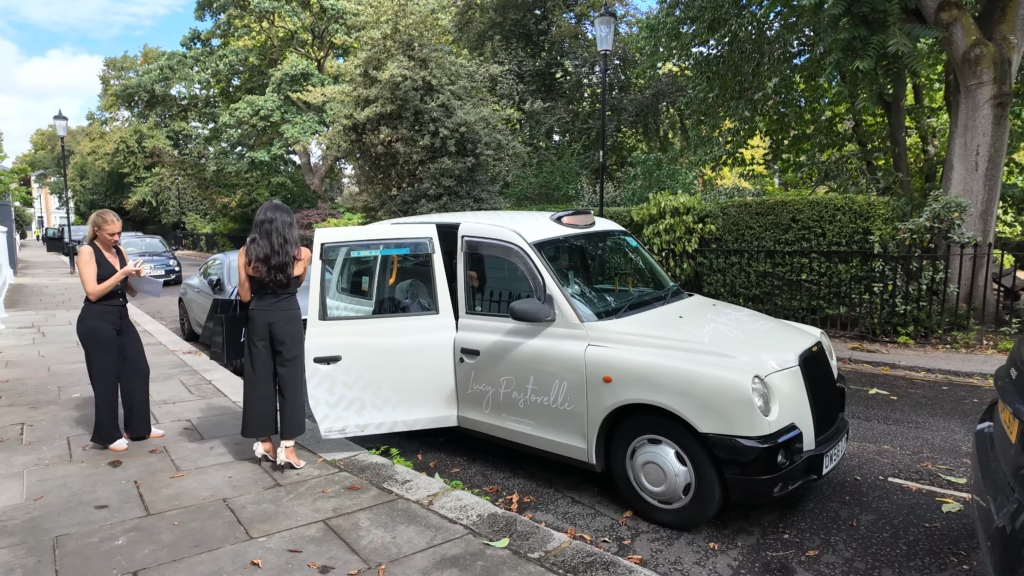
If a bus ad is a blockbuster, a taxi ad is an arthouse film: it targets a more specific, often more influential, audience and focuses on quality over quantity.
- Premium Brand Association: Taxis, especially London’s iconic black cabs, are associated with a more personal, professional, and premium service. This creates a powerful “halo effect,” lending your brand an air of prestige and trustworthiness. This is invaluable for luxury, finance, and B2B brands.
- Hyper-Targeted Access: Taxis go where buses can’t. They have unparalleled access to exclusive city-centre zones, the forecourts of five-star hotels, airport terminals, and quiet, affluent residential streets. They follow the money, naturally gravitating towards the most economically active areas of the city.
- Deeper Audience Engagement (The Captive Audience): This is the taxi’s secret weapon. The interior of the cab offers a private, distraction-free space for an average of 15-25 minutes. This allows for more detailed messaging through tip-seat ads, digital screens, and branded receipts. Interactive elements like QR codes can drive direct leads, website visits, or app downloads, making the campaign highly measurable.
- Agility and Flexibility: Unlike buses on fixed routes, taxis are agile. They follow the flow of demand, which means they are always where the action is—whether that’s a major conference, a sold-out concert, or a new restaurant opening.
Best for: Luxury brands, financial and legal services, B2B technology companies, high-end restaurants, and any brand looking to connect with an affluent, hard-to-reach professional or tourist audience.
Head-to-Head Comparison
| Feature | Bus Advertising | Taxi Advertising |
| Primary Audience | Mass market, local commuters | Affluent professionals, tourists |
| Brand Perception | Accessible, community-focused | Premium, professional, personal |
| Geographical Reach | Wide but route-restricted | City-wide, with deep access to exclusive zones |
| Audience Engagement | High external visibility | High interior engagement (captive audience) |
| Key Strength | Mass reach at low CPM | Precision targeting and prestige |
The Verdict: A Strategic Choice, Not a Competition
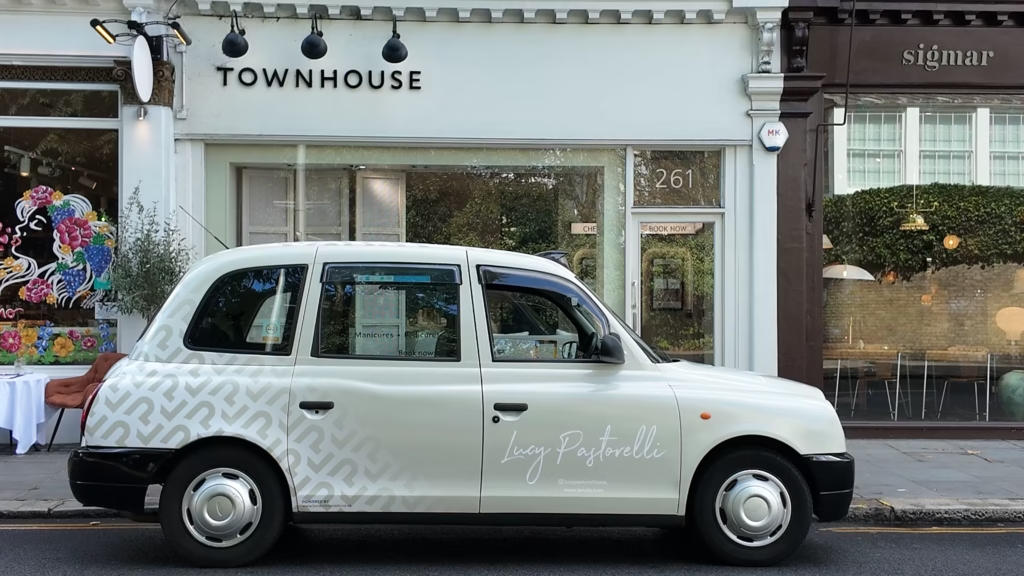
The choice between bus and taxi advertising is not about which is superior overall, but which is the right strategic fit for your objective.
- Choose Bus Ads when your primary goal is broad, top-of-funnel brand awareness. You want to make your brand a household name within a community and reach the largest number of people for the lowest possible cost per impression.
- Choose Taxi Ads when your goal is to reach a specific, high-value niche. You want to build brand prestige, communicate a more complex message, and drive direct engagement with a discerning audience.
Ultimately, the most sophisticated urban marketing strategies understand that these two formats can work in powerful harmony. A bus campaign can build the broad awareness that makes a brand familiar, while a taxi campaign can add the layer of prestige and targeted engagement that converts interest into action.
Frequently Asked Questions
- Which is more expensive?
On a per-vehicle basis, a full bus wrap is more expensive than a full taxi wrap due to its size. However, because buses reach such a large audience, their cost-per-impression (CPM) is often lower. A taxi campaign is typically a more targeted, premium investment. - Can I target specific neighbourhoods with both?
Yes. You can select bus routes that serve your target area, or you can choose a fleet of taxis whose drivers are based in your desired postcode, giving you a high concentration of ads in that zone. - Which has a better brand recall rate?
Both are exceptionally high. Studies have shown that over 80% of people can recall ads seen on both buses and taxis. The key difference is who is recalling the ad and what their perception of the brand is. - Can I use digital ads on both?
Yes, digital advertising is becoming more common on both. Many modern buses have digital side panels, and many taxis are equipped with digital tops and interior screens, allowing for dynamic, real-time creative changes for both formats.